Do Moroccans Celebrate New Year? What Travelers Should Know
Yes, but it's more layered than one holiday — how the Gregorian New Year, Amazigh New Year (Yennayer), and the Islamic New Year each fit into Moroccan life.
Yes, but the honest answer has more nuance than a simple yes or no, because Morocco doesn't run on a single calendar. Three different "New Year" moments coexist in Moroccan life, and understanding the difference helps set realistic expectations for a December visit.
[!NOTE] Fast-Facts & Direct Answer Summary
Yes, but it's more layered than one holiday — how the Gregorian New Year, Amazigh New Year (Yennayer), and the Islamic New Year each fit into Moroccan life.
- Destination Focus: Authentic Moroccan culture, scenic routes, and local travel insights
- Currency & Payments: Moroccan Dirham (MAD; ~10 MAD ≈ €1 / $1.08 USD). Cash is essential outside major hotels
- Best Travel Window: October through April offers ideal temperate weather across Morocco and the desert
- Local Hospitality: Berber culture is renowned for warm hospitality, mint tea welcoming rituals, and rich musical heritage.
Three different New Years
The Gregorian New Year — December 31 into January 1 — is the one most visitors are asking about, and it's genuinely present in Morocco's tourism and hospitality economy: hotels run gala dinners, restaurants put together special menus, and cities like Marrakech, Casablanca, and Rabat have a real, if uneven, party scene around it. How much any individual Moroccan family marks the date privately varies a lot — some treat it as a normal night, others enjoy a festive dinner, and it isn't treated as a major religious or cultural milestone the way it is in some Western countries.
Amazigh New Year, known as Yennayer, is a separate and culturally significant occasion tied to the indigenous Amazigh (Berber) calendar, and it falls in mid-January rather than around December 31 — worth knowing if you assumed all of Morocco's "New Year" energy clusters around the Gregorian date. It's marked with traditional meals, family gatherings, and real cultural weight, particularly in Amazigh communities across the country.
The Islamic New Year (Hijri New Year) follows the lunar Islamic calendar, so its date shifts each year on the Gregorian calendar. It's religiously meaningful for many Moroccan Muslims, but its character is quieter and more reflective than a party — a different kind of significance than either of the other two.
None of these contradict each other. A Moroccan household might acknowledge all three in different ways, or emphasize one over the others — there isn't a single "correct" way this plays out nationally.
Where the December 31 energy is strongest
Marrakech has the most active Gregorian New Year's scene of any Moroccan city, with the widest range of hotel events, restaurant dinners, and desert-camp options built around the date. Casablanca has a real, modern nightlife scene that shows up on New Year's Eve too. Rabat tends to be calmer and more understated. Fez leans quieter and more cultural in tone generally, though it still has quality hotel dinners and events for visitors who want them.
Outside these tourism-heavy contexts, plenty of Moroccan neighborhoods treat December 31 as an ordinary night — there's no expectation that the whole country is out celebrating, and it's worth not assuming otherwise if you're staying somewhere off the main tourist circuit.
Practical notes for travelers
Alcohol, if that matters to your plans, is available in many licensed hotels, bars, and restaurants in tourism-facing areas, but far less so outside them — worth confirming your specific venue serves it rather than assuming (see our alcohol guide for Marrakech for the fuller picture). Fireworks show up at some private venues and hotel events, especially in Marrakech, but Morocco doesn't run one unified public fireworks display the way some capitals do — expect venue-based celebrations rather than one central spectacle.
Basic cultural courtesy goes a long way: dress appropriately for wherever you are, be mindful near mosques and prayer spaces, keep noise reasonable in residential streets late at night, and be considerate toward service staff working a holiday evening. None of this requires much beyond ordinary good sense as a guest in someone else's country.
Is New Year's a good time to visit?
For most travelers, yes — December brings mild daytime weather across much of Morocco, real festive energy in the main cities, and the option to combine a celebratory night with cultural sightseeing. The trade-off is that it's also peak booking season: accommodation and popular dinners fill up well in advance, so if a specific hotel or event matters to your plans, book earlier than you'd think necessary.
The Three New Year Traditions of Morocco
To understand how New Year is observed in Morocco, you need to understand that Moroccan society observes three distinct calendar systems, each reflecting a layer of the nation's rich history.
+-----------------------+---------------------+-------------------+-------------------------+
| Calendar System       | Name & Date         | Origin & Basis    | Celebration Style       |
+-----------------------+---------------------+-------------------+-------------------------+
| Gregorian New Year    | *Rass el-Am*        | Solar international| Festive dinners, hotel  |
|                       | (December 31 /      | calendar; official| galas, desert camp      |
|                       | January 1)          | public holiday    | parties, countdowns     |
+-----------------------+---------------------+-------------------+-------------------------+
| Amazigh (Berber)      | *Yennayer*          | Ancient agrarian  | Traditional communal    |
| New Year              | (January 12 / 13)   | calendar (Year    | feasts: *Tagla* porridge|
|                       |                     | 2976+); official  | & seven-vegetable       |
|                       |                     | national holiday  | couscous; Ahwash dance  |
+-----------------------+---------------------+-------------------+-------------------------+
| Islamic (Hijri)       | *Fatih Muharram*    | Lunar Islamic     | Solemn religious prayers|
| New Year              | (Varies annually by | calendar (Year    | at mosques; reflective  |
|                       | lunar sighting)     | 1447+); official  | family gatherings;      |
|                       |                     | national holiday  | charity (*Zakat*)       |
+-----------------------+---------------------+-------------------+-------------------------+
1. Gregorian New Year (December 31 – January 1)
December 31 is widely recognized across urban hubs like Marrakech, Casablanca, Tangier, and throughout Sahara desert camps catering to international visitors. January 1 is an official paid public holiday across Morocco, with banks, government offices, and schools closed. In Marrakech, riads and restaurants host lively multi-course gala banquets with live Andalusian orchestras, Gnawa musicians, and festive midnight countdowns.
2. Yennayer: The Indigenous Amazigh New Year
In 2023, King Mohammed VI officially declared Yennayer (celebrated on January 13) an official national paid public holiday, recognizing Morocco's deep Berber heritage. Yennayer marks the first day of the ancient agricultural calendar, traditionally tied to the accession of the Amazigh Pharaoh Sheshonq I to the Egyptian throne in 950 BC.
In Berber villages across the High Atlas and the desert oases of Merzouga and the Souss Valley, families prepare Tagla, a sacred warm barley or semolina porridge served with pure argan oil and wild blossom honey. A single date pit (aghmi) is hidden inside the dish; whoever finds it in their bowl is believed to receive good fortune (baraka) and abundance for the coming agricultural season.
3. Fatih Muharram: The Islamic Lunar New Year
The Islamic New Year marks the Hijra—the historic migration of the Prophet Muhammad from Mecca to Medina in 622 AD. Because the Islamic calendar is lunar, the date moves forward by roughly 10 to 11 days each solar year. Unlike December 31, Fatih Muharram is a reflective, quiet holiday observed through mosque prayers, readings from the Quran, and peaceful family dinners.
Cultural Sensitivity & Alcohol Guidelines for Travelers
Morocco's welcoming hospitality welcomes travelers to celebrate December 31, but simple cultural awareness ensures a smooth visit:
- Public Alcohol Consumption: Drinking alcohol in public streets or squares like Jemaa el-Fnaa is strictly illegal and disrespectful. Keep champagne toasts and celebrations inside licensed riads, restaurants, and private desert camps.
- Midnight Atmosphere in Jemaa el-Fnaa: While thousands gather in Marrakech's main square on New Year's Eve, the atmosphere is an energetic open-air night market rather than a Western-style countdown with fireworks. Expect street acrobats, storytellers, food smoke, and musical circles, but no city-sponsored fireworks display.
Yennayer Traditions: Celebrating the Amazigh Heritage
The official recognition of Yennayer as a national paid public holiday reflects Morocco's embrace of its deep Amazigh identity:
+-------------------+-----------------------------------------------------------------+
| Yennayer Element  | Meaning and Cultural Expression                                 |
+-------------------+-----------------------------------------------------------------+
| The Festive Feast | Families prepare *Seksu Seb'a Khdari* (couscous loaded with     |
|                   | seven symbolic seasonal vegetables: turnips, carrots, squash,   |
|                   | chickpeas, fava beans, cabbage, and sweet onions).              |
+-------------------+-----------------------------------------------------------------+
| The Hidden Pit    | A date seed (*aghmi*) or whole almond is tucked into the        |
| (*Aghmi*)         | couscous or barley porridge; finding it brings blessing.        |
+-------------------+-----------------------------------------------------------------+
| Traditional Dress | Women wear embroidered Berber tunics with heavy amber and silver|
|                   | enamel jewelry; men wear wool *djellabas* with leather pouches. |
+-------------------+-----------------------------------------------------------------+
| Music & Song      | Vibrant *Ahwash* and *Ahidous* choral singing and frame-drum    |
|                   | performances celebrating nature and harvest abundance.         |
+-------------------+-----------------------------------------------------------------+
If you travel through southern Morocco during mid-January, you can witness Yennayer celebrations firsthand. In desert oasis towns like Merzouga, Rissani, and Tinghir, village squares fill with the rhythmic drumming of Amazigh musical troupes, communal poetry exchanges, and shared bowls of fresh couscous open to locals and visiting travelers alike.
Practical Travel Tips for the Holiday Period
- Bank and Business Closures: Banks, post offices, and administrative government agencies close on January 1 and January 13. Tourist monuments like Ait Benhaddou, Kasbah Taourirt, and Majorelle Garden remain open on both holidays.
- Intercity Transport Availability: CTM buses, ONCF passenger trains, and domestic flights operate regular schedules on both holiday dates, though booking tickets several days in advance is advised.
Why January is a Superb Month to Visit Morocco
Visiting Morocco around the New Year and throughout January offers distinct advantages for travelers:
+-----------------------+-------------------------------------------------------------+
| Travel Metric         | January Travel Realities in Morocco                         |
+-----------------------+-------------------------------------------------------------+
| City Crowds           | After January 2, holiday crowds dissipate, leaving medinas  |
|                       | peaceful and easy to explore.                               |
+-----------------------+-------------------------------------------------------------+
| Daytime Temperatures  | Sunny, pleasant 18°C to 22°C across Marrakech and the south;|
|                       | perfect for sightseeing without intense summer heat.        |
+-----------------------+-------------------------------------------------------------+
| High Atlas Scenery    | Snow-capped mountain peaks create breathtaking backdrops    |
|                       | across the Tizi n'Tichka pass and southern valleys.         |
+-----------------------+-------------------------------------------------------------+
| Hotel Pricing         | Post-holiday January rates drop 25% to 40% across riads     |
|                       | and boutique kasbahs compared to Christmas peak pricing.    |
+-----------------------+-------------------------------------------------------------+
Whether you celebrate the festive countdown of December 31, explore the cultural roots of Yennayer on January 13, or enjoy the uncrowded tranquility of winter desert glamping, Morocco offers rich cultural celebrations throughout the start of the year.
The Agricultural Symbolism of the Seven Vegetables
The traditional Yennayer couscous (Seksu Seb'a Khdari) is prepared with seven specific vegetables, each carrying symbolic meaning for the coming agricultural year:
+---------------------+---------------------------------------------------------------+
| Vegetable Ingredient| Agricultural and Cultural Symbolism                           |
+---------------------+---------------------------------------------------------------+
| Turnips (White/Gold)| Purity of intention and fertility of the earth                |
+---------------------+---------------------------------------------------------------+
| Carrots             | Sweetness of life and strength in facing adversity            |
+---------------------+---------------------------------------------------------------+
| Pumpkin / Squash    | Abundance, expansive prosperity, and community generosity     |
+---------------------+---------------------------------------------------------------+
| Chickpeas & Fava    | Sustenance, endurance, and traditional food security          |
+---------------------+---------------------------------------------------------------+
| Cabbage             | Protection of family unity and harmonious community living    |
+---------------------+---------------------------------------------------------------+
| Sweet Onions        | Healing, vitality, and renewal of the household spirit        |
+---------------------+---------------------------------------------------------------+
| Zucchini / Courgette| Fresh growth, seasonal rains, and agricultural renewal        |
+---------------------+---------------------------------------------------------------+
The collective preparation of the couscous is a multi-generational ritual, with grandmothers, mothers, and daughters gathering around large terracotta dishes (gsa'a) to roll the semolina grains by hand, ensuring that blessings (baraka) are shared by all.
Amazigh Folk Arts, Jewelry, and Heritage in the South
Experiencing New Year celebrations in southern Morocco introduces travelers to the rich material culture of the Amazigh people:
+-----------------------+-------------------------------------------------------------+
| Craft & Heritage Item | Cultural Signifiers and Traditional Usage                   |
+-----------------------+-------------------------------------------------------------+
| Berber Silver Jewelry | Handcrafted silver fibulae (*tizerzai*), heavy amber beads, |
|                       | and enameled bracelets carrying tribal protective motifs.   |
+-----------------------+-------------------------------------------------------------+
| Ahwash Music & Dance  | Communal circular dance featuring polyrhythmic frame-drums  |
|                       | (*allun*) and call-and-response poetry chanting.            |
+-----------------------+-------------------------------------------------------------+
| Handwoven Tribal Rugs | Bold geometric carpets (Beni Ourain, Taznakht, and Boucherouite|
|                       | woven with natural sheep wool by village cooperatives.     |
+-----------------------+-------------------------------------------------------------+
During festive celebrations like Yennayer, women wear their finest heirloom silver jewelry passed down through maternal lines, while musicians perform ancient songs honoring the earth, agricultural harvest, and ancestral resilience across the desert oases.
Celebrating Yennayer in the Sahara Oasis
In the oasis communities surrounding Merzouga and the Tafilalet, Yennayer holds profound agricultural meaning:
- Date Palm Pruning & Soil Blessing: Farmers perform ceremonial soil blessings across the date palm groves, honoring the water canals (khettaras) that sustain desert life.
- Communal Village Gatherings: In the evenings, families gather in mud-brick courtyard homes to share steaming bowls of Tagla barley porridge, with children singing traditional Amazigh verses welcoming the renewal of the seasons.
- Welcoming Foreign Travelers: Berber hospitality welcomes visitors to join these gatherings; sharing a glass of mint tea and accepting a small portion of festive porridge is customary and warmly received.
Frequently Asked Questions (FAQ)
Do Moroccans celebrate Gregorian New Year on December 31st?
Yes, Moroccans celebrate Gregorian New Year, particularly in major cities like Casablanca, Marrakech, and Rabat. While January 1st is a public holiday, Morocco also observes the Islamic (Hijri) New Year and the Amazigh New Year (Yennayer on January 13th).
Is January 1st a public holiday in Morocco?
Yes, January 1st is an official public holiday across Morocco. Government offices, banks, and post offices are closed, but tourist facilities, restaurants, markets, and tour operations function as normal.
How do local Moroccan families spend New Year's Eve?
Urban Moroccan families often purchase festive pastries and cakes from local pâtisseries, enjoy home-cooked chicken or lamb pastilla dinners, and watch special televised musical variety specials on national Moroccan television channels.
Is December 31st noisy or disruptive for travelers in Morocco?
No. Outside of nightlife districts like Hivernage in Marrakech or the Corniche in Casablanca, Morocco remains calm and peaceful. Quiet desert camps and traditional medina riads offer serene retreats away from loud party crowds.
Plan a trip around it
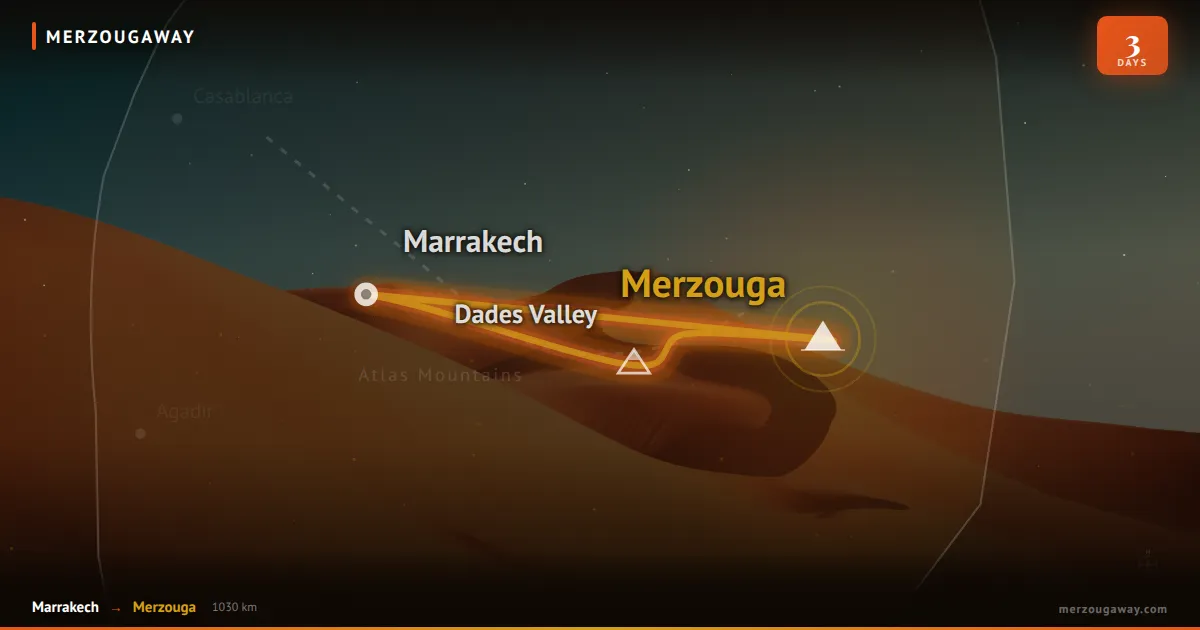
We help travelers build itineraries that combine a Marrakech New Year's Eve with real time in the Sahara — a private desert tour to Merzouga pairs naturally with a few nights in the city either side of December 31.
Contact us:
- Email: hello@merzougaway.com
- WhatsApp: +212675203319 / +212668534981
Sahara Route & Drive-Time Estimator
Calculate realistic driving hours across the High Atlas (Tizi n'Tichka pass), compare scenic stops (Dadès, Todra, Ziz), and plan your custom desert itinerary.
MerzougaWay Team
We are a passionate team of local guides dedicated to sharing the beauty and culture of our home, Morocco. Our journey began with a simple desire to offer authentic, memorable experiences that go beyond the typical tourist trails.