Driving in Morocco as a Tourist: Police Checkpoints, Speed Radars & Mountain Roads (2026 Guide)
Everything you need to know about driving in Morocco as a foreigner: Police checkpoint rules, radar traps, parking guardiens, Tizi n'Tichka safety, and local laws.
Renting a car and embarking on a self-drive road trip through Morocco is an exhilarating way to experience the country's diverse landscapes—from the palm oases of the south to the dramatic hairpin switchbacks of the High Atlas Mountains. Morocco has invested billions of dollars into modernizing its national highway infrastructure, making major paved corridors (such as the N9, N10, and N13) smooth and well-maintained.
However, driving in Morocco as a foreigner comes with distinct unwritten rules, high-frequency police checkpoints, strict automated radar traps, and unique local customs (such as yellow-vested parking attendants) that can easily catch unprepared tourists off guard.
In this definitive 2026 guide, our local team at MerzougaWay breaks down the exact legal requirements, how to handle police interactions with confidence, how to navigate mountain passes safely, and what to do when parking in Moroccan cities.
[!NOTE] Fast-Facts & Direct Answer Summary: Driving in Morocco as a Tourist
- Driver's License Requirements: An International Driving Permit (IDP) is recommended, but national licenses from the US, UK, EU, and Canada printed in Latin characters are legally accepted for stays under 90 days.
- Speed Limits & Radar Traps: 60 km/h in urban areas/villages, 80–100 km/h on national rural roads (N-roads), and 120 km/h on paid autoroutes (A-roads). Radar controls are extremely frequent near town entrances; speeding fines are 150 to 300 MAD (€15–€30) with an official paper receipt.
- Police Checkpoint Rule: Always slow down to a crawl at the white-and-red "Halte Police / Gendarmerie" sign. Do NOT drive past the sign until the officer gives a clear hand wave.
- Parking "Guardiens": Legitimate parking attendants wear high-visibility neon vests. Standard tipping rates are 3–5 MAD for day parking and 10–20 MAD for overnight street parking.
- Night Driving Rule: Never drive across mountain passes like Tizi n'Tichka after sunset due to unlit winding curves and heavy freight transport.
1. Quick Master Rules & Fines Matrix
The table below outlines Morocco's road regulations, official traffic fines, and parking norms:
┌─────────────────────────┬──────────────────────────┬──────────────────────────┐
│ REGULATION / SITUATION  │ LEGAL REQUIREMENT        │ OFFICIAL FINE / STANDARD │
├─────────────────────────┼──────────────────────────┼──────────────────────────┤
│ Urban Speed Limit       │ 60 km/h (Strict)         │ 150–300 MAD on-the-spot  │
│ National Rural Highway  │ 80–100 km/h (N-Roads)    │ 150–400 MAD on-the-spot  │
│ Paid Toll Expressway    │ 120 km/h (Autoroute A)   │ 300–700 MAD on-the-spot  │
│ Seatbelts (Front & Rear)│ Mandatory for all riders │ 150 MAD per unbelted rider│
│ Mobile Phone While Drive│ Strict hands-free only   │ 500 MAD official fine    │
│ Roundabout Right-of-Way │ Traffic INSIDE has right │ 500 MAD (Yield to left)  │
│ Day Street Parking      │ Pay yellow-vested guard  │ 3–5 MAD cash             │
│ Overnight Street Parking│ Pay yellow-vested guard  │ 10–20 MAD cash           │
│ Driving Side            │ Right side of the road   │ Pass on the left only    │
└─────────────────────────┴──────────────────────────┴──────────────────────────┘
2. The Police Checkpoint Protocol: Step-by-Step
Foreigners are often intimidated by the heavy police presence on Moroccan highways. In reality, police checkpoints (barrages) are standard security measures designed to maintain national safety and enforce road speed laws. Officers are generally professional, courteous, and welcoming to tourists.
   [Approach Sign: "Halte"] ──► [Full Stop at Sign] ──► [Wait for Hand Wave] ──► [Proceed]
   • Drop speed to 10 km/h      • Do NOT cross sign      • Greet with "Salam"    • Safe transit
The 4-Step Checkpoint Procedure:
- Identify the Checkpoint: As you enter or exit any city, town, or regional border, you will see a prominent sign: "HALTE POLICE" (in urban areas) or "HALTE GENDARMERIE ROYALE" (on rural highways), accompanied by tire-spike strips (herse) on the road shoulder.
- Come to a Complete Crawl: Slow your vehicle down to 10 km/h. Stop directly before the sign. Never roll past the checkpoint sign without authorization.
- Wait for the Officer's Signal: Look directly at the officer. They will evaluate your vehicle. Once they give a nod or a forward hand wave, you may gently accelerate through.
- If Stopped for an Inspection:
- Roll down your front window, turn on your interior cabin light if at night, and greet the officer politely ("Salam Alaykum" or "Bonjour").
- Hand over your documents: Passport, Driver's License, and the rental car pouch containing the vehicle registration (Carte Grise), insurance certificate (Attestation d'Assurance), and road tax stamp (Vignette).
- The officer will ask where you are coming from and where you are traveling ("Marrakech to Dades"). In 95% of cases, they will inspect the papers, smile, say "Bienvenue au Maroc", and send you on your way.
Handling Speeding Fines (What to Do):
If you were caught speeding by a radar tripod:
- Stay calm, polite, and respectful.
- The officer will show you the exact speed recorded on their digital radar screen.
- Speeding fines in Morocco are legally fixed by law: 150 MAD (under 20 km/h over limit), 300 MAD (20–30 km/h over), or 400 MAD (30+ km/h over).
- Always request an official paper receipt (Procès-Verbal / Quittance) when paying the fine in cash. Never offer or accept informal cash bribes.
3. Understanding the "Guardien" (Parking Attendant) System
When parking your rental car on any public street in Marrakech, Fes, Essaouira, or Ouarzazate, a man wearing a high-visibility neon yellow or orange vest will immediately approach you.
                    ┌─────────────────────────────────────────────────┐
                    │          THE PARKING GUARDIEN SYSTEM            │
                    ├─────────────────────────────────────────────────┤
                    │ • Official city-licensed street attendants      │
                    │ • They guide you into spots & guard your car    │
                    │ • Standard Day Rate: 3–5 MAD (€0.30–€0.50)      │
                    │ • Standard Overnight Rate: 10–20 MAD (€1–€2)    │
                    │ • Pay ONLY when leaving (or upfront at night)   │
└─────────────────────────────────────────────────┘- Are they legitimate? Yes. Guardiens are an established part of Moroccan urban life. They are sanctioned by local municipal councils to manage street parking, assist drivers in reversing out of tight spots, and deter vehicle break-ins.
- How much to pay:
- Quick stop (1–2 hours): 2 to 3 MAD.
- Half-day or evening dinner parking: 5 MAD.
- Overnight parking outside a riad or hotel: 10 to 20 MAD.
- Payment etiquette: For daytime parking, pay when you return to the car and leave the space. For overnight parking, it is customary to pay the night attendant when you park your car in the evening.
4. Mountain Driving: Navigating the Tizi n'Tichka Pass (N9)
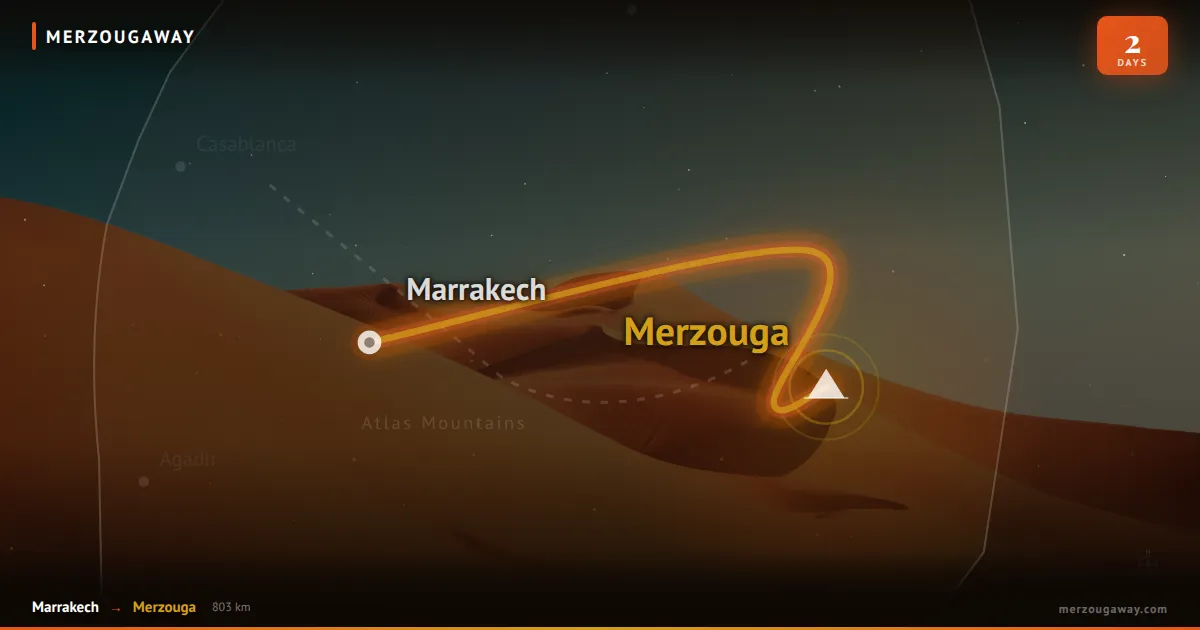
The Tizi n'Tichka pass links Marrakech to Ouarzazate, cresting at an altitude of 2,260 meters (7,415 feet). It is one of North Africa's most spectacular engineering feats, but demands respect from self-drivers.
  [Marrakech Basin] ──► [Winding N9 Ascent] ──► [Tizi n'Tichka 2,260m] ──► [Ouarzazate Desert]
  • 4-Lane Expanded Road  • Sharp Hairpin Curves  • Dazzling Viewpoints    • Gateway to Sahara
5 Critical Mountain Safety Rules:
- Respect Blind Curves: Do not overtake trucks or slow agricultural tractors on blind mountain curves. Wait for designated overtaking lanes with clear broken white lines.
- Watch for Sudden Speed Drops: The N9 speed limit drops rapidly from 100 km/h to 60 km/h around mountain settlements and bridge crossings. Gendarmerie speed traps are frequently stationed at the bottom of downhill descents.
- Yield to Uphill Heavy Transport: On narrow two-lane sections, heavy trucks laboring uphill have the right of way. Give them ample room.
- Beware of Winter Ice (Dec–Feb): During mid-winter, snow and black ice can occur on the highest pass. Check road condition reports before leaving Marrakech.
- NEVER Drive at Night: Street lighting is absent across 90% of the mountain pass. Unlit vehicles, stray mules, and rockfall debris make night driving hazardous.
5. Gas Stations, Cash & Fuel Realities in the South
- Fuel Types: Diesel (Gasoil) and Unleaded Gasoline (Sans Plomb). Diesel is the dominant fuel for 90% of rental vehicles and 4x4s in Morocco.
- Major Brands: Afriquia, Shell, TotalEnergies, and Winxo.
- Payment Warning: While gas stations in major cities accept credit cards, rural gas stations in the Dadès Valley, Todra Gorge, and Merzouga frequently operate on CASH ONLY due to spotty card terminal connections. Always carry 500–1,000 MAD in physical banknotes when road-tripping.
- Attendant Tipping: All Moroccan gas stations are full-service (an attendant pumps the fuel and washes your windshield). A tip of 2 to 5 MAD is customary and appreciated.
Packing Tip: Prepare your road trip and desert gear with our free Smart Sahara Packing List Generator.
[!TIP] Planning a Road Trip to the Sahara? Calculate realistic driving hours, mountain passes (Tizi n'Tichka), and rest stops with our interactive Sahara Route & Drive-Time Estimator.
🛣️ Highway Tolls (Autoroutes du Maroc) & Mountain Pass Driving Protocols
Morocco's modern toll motorways (Autoroutes du Maroc / ADM) connect major urban centers from Tangier to Agadir with smooth, multi-lane divided highways, while national secondary routes cross challenging mountain terrain:
┌─────────────────────────────────────────────────────────────────────────────────────────────┐
│                    MOROCCAN MOTORWAY TOLLS (ADM) & ROUTE MATRIX                             │
├─────────────────────┬────────────┬─────────────┬────────────────┬───────────────────────────┤
│ HIGHWAY SECTOR      │ ROUTE #    │ DISTANCE    │ TOLL COST(MAD) │ PAYMENT METHODS ACCEPTED  │
├─────────────────────┼────────────┼─────────────┼────────────────┼───────────────────────────┤
│ Casablanca ➔ Marrak │ A3         │ 240 km      │ 82 MAD (~€7.50)│ Cash (MAD) or Jawaz Tag   │
│ Tangier ➔ Rabat     │ A1 / A5    │ 250 km      │ 95 MAD (~€8.70)│ Cash (MAD) or Jawaz Tag   │
│ Casablanca ➔ Fes    │ A2         │ 290 km      │ 110 MAD (~€10) │ Cash (MAD) or Jawaz Tag   │
│ Marrakech ➔ Agadir  │ A3         │ 230 km      │ 96 MAD (~€8.80)│ Cash (MAD) or Jawaz Tag   │
│ Ouarzazate ➔ Merzou │ N10 / N13  │ 365 km      │ Free (National)│ 100% Paved single carriag │
└─────────────────────┴────────────┴─────────────┴────────────────┴───────────────────────────┘
Mountain Pass Driving Protocols (Tizi n'Tichka & Tizi n'Test)
- Engine Braking on Steep Descents: When descending from the Tizi n'Tichka summit (2,260 meters) toward Ouarzazate, shift manual transmission cars into 2nd or 3rd gear to utilize engine compression braking. Riding your vehicle's foot brake continuously down 25 kilometers of mountain switchbacks overheats the brake pads, boils hydraulic brake fluid, and causes dangerous brake fade.
- Emergency Roadside Assistance Numbers: Save these essential Moroccan emergency contact numbers into your smartphone before starting your engine:
- 177: Gendarmerie Royale (National rural highway and mountain patrol).
- 19: Police Nationale (Urban emergencies inside cities and medina boundaries).
- 150: Protection Civile (Ambulance, paramedics, and fire rescue).
- 5050: ADM Motorway Breakdown Service (Official tow trucks and highway patrol).
- Jawaz Electronic Toll Pass: If planning a multi-city road trip, consider purchasing an ADM Jawaz RFID toll tag at any motorway service station for 50 MAD, preloaded with 100 to 200 MAD of toll credit. Jawaz lanes are marked with an orange "J" icon and allow you to glide through toll barriers at 30 km/h without waiting in long cash payment queues.
- Understanding Moroccan Roundabout Right-of-Way Rules: Roundabout priority in Morocco can surprise foreign drivers. On modern urban roundabouts and highway circles with yield signs (Cédez le passage), standard international priority applies: vehicles already circulating inside the roundabout have the right-of-way. However, at older rural intersections without yield signs, the traditional French priorité à droite applies, meaning vehicles entering from your right have absolute right-of-way! Always look for painted road triangles before entering.
- Navigating Animal Crossings in Rural Valleys: Once you travel east of Ouarzazate along the N10 and N13, the greatest driving hazards are not other vehicles but wandering livestock. Flocks of Barbary sheep, desert goats, and semi-feral dromedary camels graze beside unfenced roadsides. Camels are particularly unpredictable: they move silently, have poor eye reflection under car headlights at night, and can suddenly step into the road. Never drive rural southern desert roads after total darkness.
- Dealing with Flat Tires & Roadside Vulcanizers (Pneumatiques): If you suffer a puncture on remote southern roads, look for small roadside repair shacks marked "Pneu" or decorated with stacked tires. Local vulcanizers will dismount your tire, plug the puncture with a vulcanized rubber plug, rebalance the wheel, and reinflate it for just 20 to 40 MAD (€2 to €4) in cash.
- Fuel Type Clarification: Sans Plomb vs Gasoil: Moroccan service stations provide two primary fuel types: Sans Plomb (unleaded gasoline) and Gasoil (diesel). Most 4x4s, SUVs, and commercial tour vans run strictly on diesel (Gasoil or premium Gasoil 10). Always verify the correct fuel type on your rental car gas cap sticker before authorizing the pump attendant to dispense fuel, and keep your fuel receipt until your next fill-up.
Frequently Asked Questions (FAQ)
Is it safe for tourists to rent a car and drive in Morocco?
Yes. Morocco has modern paved highways, clear French/Arabic road signage, and a strong police presence that ensures high road security. As long as you follow speed limits, avoid night driving, and drive defensively, self-driving is safe and rewarding.
What side of the road do they drive on in Morocco?
Morocco drives on the right side of the road, with steering wheels on the left (identical to the United States, Canada, and mainland Europe).
What are the roundabout right-of-way rules in Morocco?
On major modern roundabouts, vehicles already inside the circle have right of way (yield to traffic from your left). However, at older roundabouts with no priority signs, traditional right-of-way (priorité à droite) still applies. Look for the yellow triangular yield sign (Cédez le passage) before entering.
What should I do if I get into a car accident in Morocco?
Do not move the vehicle. Immediately call the national police (19 in cities) or the Gendarmerie Royale (177 on rural roads), as well as your rental agency. In Morocco, an official police accident report (Constat Amiable) is legally required for insurance claims.
Can I drive a standard 2WD rental car into Merzouga desert camps?
No. Standard 2WD cars can drive on paved asphalt (N13) directly into Merzouga village, but cannot drive onto the sand dunes of Erg Chebbi. You must leave your rental car in a secure hotel parking lot in the village and take a 4x4 or camel transfer to reach your desert camp.
Relax and Let Our Berber Drivers Guide You
Prefer to enjoy the stunning High Atlas and desert vistas without the stress of mountain switchbacks, radar checkpoints, and navigation? MerzougaWay provides luxury private 4x4 tours with experienced, licensed local Berber driver-guides.
- Explore Private Sahara Expeditions by Starting City:
Contact Our Travel Team Directly:
- WhatsApp: +212 675 203 319 / +212 668 534 981
- Email: hello@merzougaway.com
Sahara Route & Drive-Time Estimator
Calculate realistic driving hours across the High Atlas (Tizi n'Tichka pass), compare scenic stops (Dadès, Todra, Ziz), and plan your custom desert itinerary.
MerzougaWay Team
We are a passionate team of local guides dedicated to sharing the beauty and culture of our home, Morocco. Our journey began with a simple desire to offer authentic, memorable experiences that go beyond the typical tourist trails.