Marrakech Airbnb: Complete Guide to the Best Stays (2026)
Riad in the medina or apartment in Gueliz? A practical guide to choosing where to stay in Marrakech on Airbnb — by neighborhood, budget, and what actually matters when you read a listing.
Marrakech's Airbnb scene splits fairly cleanly along one line: a traditional riad in the old medina, or a modern apartment or villa in one of the newer districts. Both are genuinely good options, and which one suits you has less to do with budget than with what kind of trip you want — immersive and atmospheric, or convenient and predictable. This guide is about making that choice well, not about chasing a specific "best" listing, since the right property depends heavily on your own priorities.
[!NOTE] Fast-Facts & Direct Answer Summary
Riad in the medina or apartment in Gueliz? A practical guide to choosing where to stay in Marrakech on Airbnb — by neighborhood, budget, and what actually matters when you read a listing.
- Destination Focus: Authentic Moroccan culture, scenic routes, and local travel insights
- Currency & Payments: Moroccan Dirham (MAD; ~10 MAD ≈ €1 / $1.08 USD). Cash is essential outside major hotels
- Best Travel Window: October through April offers ideal temperate weather across Morocco and the desert
- Local Hospitality: Berber culture is renowned for warm hospitality, mint tea welcoming rituals, and rich musical heritage.
Choosing a neighborhood
The medina — the old walled city — is where most first-time visitors want to be, and for good reason: you're a short walk from the souks, Jemaa el-Fnaa, and the palaces, and staying in a riad here means courtyard architecture, a rooftop terrace, and often a host who doubles as a genuinely useful source of local tips. The tradeoff is real too — narrow alleys mean your host or a porter usually needs to walk you in from the nearest accessible point, stairs are common and sometimes steep, and noise from the surrounding streets can be more noticeable than in a quieter district. Expect roughly $50-150 a night for a room in a shared riad, and $100-300 or more for an entire small riad to yourself.
Gueliz, the modern "ville nouvelle," trades atmosphere for convenience: wider streets, easier taxi access, a much bigger concentration of restaurants and cafés, and apartments that tend to run $40-120 a night with straightforward amenities. It suits travelers who want to be based somewhere practical and explore the medina by day rather than sleep in it. Hivernage, just next door, is a step up in price ($80-250+) and skews toward a quieter, more upscale crowd, useful if you're prioritizing relaxation over sightseeing convenience. The Palmeraie, Marrakech's palm-grove district on the city's edge, is where you'll find the large private villas with their own pools — genuinely excellent for a family or group traveling together, but a taxi ride from everything else, so factor that into your day-to-day plans rather than treating it as a walkable base.
What actually matters in a listing
Air conditioning is close to non-negotiable if you're visiting between June and August, when Marrakech regularly hits 40°C or more — check for it explicitly rather than assuming, since older riads sometimes rely on fans alone. Reliable WiFi and genuinely hot water around the clock are the two amenities that generate the most complaints when they're missing, so it's worth reading recent reviews specifically for mentions of either. A kitchen matters much more for longer stays than short ones; if you're only in Marrakech a few nights, eating out is part of the experience anyway. Beyond the basics, riads often distinguish themselves with a courtyard pool or fountain, a rooftop for sunset views, and an included traditional Moroccan breakfast — genuinely worth checking, since it can offset what otherwise looks like a higher nightly rate compared to a plain apartment.
When you're comparing specific listings, recent reviews are more useful than the overall star rating or "superhost" badge alone — look for mentions of the exact things above (air conditioning that actually works, hot water reliability, accurate photos of the stairs and room size) rather than general praise. It's also worth messaging the host directly with any specific question before booking; response quality before you've paid is a fair preview of how helpful they'll be once you've arrived.
Master Neighborhood Matrix: Choosing Vacation Rentals in Marrakech
Booking vacation rentals and riads in Marrakech on platforms like Airbnb or Vrbo provides an intimate, authentic alternative to traditional chain hotels. However, Marrakech's diverse urban geography—ranging from the ancient pedestrian alleys of the 11th-century medina to the wide, modern palm-lined boulevards of Gueliz—means your choice of neighborhood dictates your daily travel rhythm.
The following master evaluation matrix compares Marrakech's primary rental neighborhoods:
| Neighborhood / District | Urban Character & Atmosphere | Average Nightly Rate (MAD / EUR) | Walkability & Car Access | Noise Level & Nightlife | Best Suited Traveler Profile | | :--- | :--- | :--- | :--- | :--- | :--- | | Medina (Mouassine & Bab Doukkala) | Ancient historic core; 100% pedestrian; vibrant souks | 800 – 2,500 MAD (€75 – €230) whole riad | High walkability; zero car access inside alleys (luggage porters needed) | Moderate to High (Mosque call to prayer, market buzz) | First-time visitors, culture lovers seeking immersive riad life | | Gueliz (The French Quarter) | Modern European district; wide avenues, chic cafes, boutiques | 600 – 1,600 MAD (€55 – €150) apartment | High; wide sidewalks; easy petit taxi access | Moderate (Traffic, trendy restaurants, bars) | Digital nomads, long-term stays, travelers wanting modern amenities | | Hivernage (Luxury Hotel Zone) | Upscale leafy residential district; luxury dining & casinos | 1,500 – 4,500 MAD (€140 – €420) luxury flat | Moderate; wide boulevards; 15 min walk to Jemaa el-Fna | Low to Moderate (Tranquil streets, high-end nightclubs) | Luxury travelers, couples seeking tranquil upscale surroundings | | Palmeraie (Palm Grove Oasis) | Gated luxury villa estates nestled in 100,000 palm trees | 3,500 – 12,000 MAD (€325 – €1,100) villa | Very low; requires private chauffeur or rental car (15 min drive) | Very Low (Total tranquil seclusion, birdsong) | Multi-generational families, private parties wanting Olympic-sized pools | | Sidi Ghanem (Industrial Design District) | Bohemian arts quarter; designer ateliers, furniture workshops | 700 – 1,800 MAD (€65 – €165) loft | Low; commercial district; requires taxi to city center | Low at night; daytime industrial hum | Artists, designers, return visitors wanting industrial-chic lofts |
Renting a Whole Riad: Dedicated Staff & Moroccan House Culture
One of Marrakech's greatest vacation rental privileges is booking an entire private riad for your family or group of friends:
- The Dedicated Riad Host & Cook (Khadija): Most premier riad rentals include a dedicated Moroccan housekeeper and cook. Each morning, guests enjoy freshly baked msmen pancakes, warm baghrir honeycomb crepes, fresh orange juice, Moroccan mint tea, and eggs served on the sunny roof terrace. For a modest grocery fee (typically 120 to 180 MAD per person), your cook will shop at local medina markets and prepare a sumptuous evening feast of chicken tagine with preserved lemons or tender beef with caramelized prunes.
- Local Tourist Taxes (Taxe de Séjour): Licensed tourist accommodations in Marrakech collect official municipal taxes (Taxe de Promotion Touristique and Taxe de Séjour), ranging from 20 to 35 MAD (~€2 to €3.50 EUR) per person per night. Ensure your booking clearly states whether this tax is included or payable in cash upon check-in.
Red Flags to Avoid When Booking Marrakech Rentals
- Unlicensed Properties (Non-Classé): Moroccan tourism regulations require vacation rentals to hold official authorization (Maison d'Hôtes classification). Unlicensed properties risk unexpected police closures and lack liability insurance. Verify that your host is officially registered.
- Misleading Location Pins: Due to the labyrinthine nature of the medina, some hosts place listing pins near Jemaa el-Fna when the actual property is situated in distant, unlit outskirts near Bab Aylen. Read recent guest reviews specifically regarding walking distance and alley lighting at night.
- No Active Heating in Winter: Marrakech nights between December and February can drop to 6°C (43°F). Traditional thick earthen walls keep riads chilly unless equipped with reverse-cycle air conditioning or operational wood fireplaces.
Navigating Medina Check-In & Luggage Porter Logistics
Checking into a traditional vacation rental or riad in the historic medina requires navigating narrow pedestrian alleys where vehicles cannot enter:
- The City Gate Meeting Point: When booking a medina riad, your host will designate a specific historic city gate (Bab) or taxi drop-off square (such as Bab Doukkala, Bab Aylen, or Place des Ferblantiers) where your taxi or private driver must drop you.
- The Luggage Handcart Porters (Koussa): Licensed luggage porters operating large two-wheeled wooden handcarts wait at medina gates. For a modest fee of 20 to 40 MAD (~$2 to $4 USD) per cart, the porter will load all your heavy suitcases, navigate the cobblestone labyrinth, and deliver your luggage directly to the front door of your riad.
- Grocery Shopping for Self-Catering: If your apartment or riad features a kitchen, visit the Marché Central in Gueliz for fresh fish, aged cheeses, and European staples, or explore local medina neighborhood hanouts for daily fresh eggs, milk, seasonal fruits, and warm crusty khobz bread.
Safety, Security, and Night Watchmen in the Medina
- Neighborhood Night Watchmen (Gardien de Nuit): Traditional medina residential streets (derbs) employ dedicated local night watchmen who patrol the alleys from dusk until dawn. If returning to your riad late at night, greeting the watchman with a friendly "Salam" and offering a small weekly gratuity (20 to 50 MAD) ensures warm neighborhood familiarity and enhanced peace of mind.
Tipping Etiquette for Riad Staff & Local Service Providers
Gratuities (Pourboire) reflect genuine appreciation for warm Moroccan hospitality:
- Dedicated Riad Housekeeper/Cook (Khadija): For a private whole-riad rental where the housekeeper prepares daily breakfasts and cleans rooms, a customary collective tip is 100 to 150 MAD (~$10 to $15 USD) per day from the entire group, presented in cash in an envelope at checkout.
- Luggage Porters (Koussa): 20 to 40 MAD per luggage cart from the taxi gate to the riad door.
- Night Watchmen (Gardien de Nuit): 20 to 50 MAD per week for keeping watch over the residential alleyway.
- Medina Taxi Drivers: Round up the meter by 5 to 10 MAD on daytime fares.
Local Riad Etiquette & Cultural Respect
When staying in a traditional Moroccan riad or residential vacation rental:
- Respecting Neighborhood Quiet Hours: Medina residential alleys are peaceful family neighborhoods. Keep terrace voices and music down after 22:00 PM to respect local residents.
- Water Conservation: Water is a precious resource in Morocco; turn off taps while brushing teeth and keep showers reasonable.
- Greeting Your Neighbors: A polite "Salam Alaikum" to local shopkeepers and elders as you walk down your derb fosters wonderful community friendship and genuine smiles throughout your stay.
Frequently Asked Questions (FAQ)
Are Airbnbs safe and legal in Marrakech?
Yes, short-term vacation rentals are legal and regulated in Morocco. Official hosts must register guests and collect standard tourist taxes (taxe de séjour, typically 25–35 MAD / €2.50–€3.50 per person per night).
Should I book an Airbnb inside the Medina or in Gueliz/Hivernage?
Choose a traditional riad in the Medina (Mouassine, Kasbah, or Bab Doukkala) for historic courtyards, plunge pools, rooftop terraces, and immersion. Choose modern apartments in Gueliz or Hivernage for elevator access, modern air conditioning, nightlife, and parking.
Can unmarried couples stay in an Airbnb in Marrakech?
Foreign tourists holding non-Moroccan passports can share rooms and Airbnbs without showing a marriage certificate. However, under Moroccan Penal Code Article 490, Moroccan citizens sharing accommodations with a partner must present an official marriage certificate.
How do I reach my Medina Airbnb if cars cannot enter the narrow alleys?
Coordinate with your host in advance to arrange a luggage porter (koussa or handcart operator) to meet your taxi at the nearest medina gate (e.g., Bab Doukkala or Bab Aylen). A tip of 20 to 40 MAD per luggage cart is standard.
Booking timing and pricing
High season in Marrakech runs roughly October through April, when temperatures are most comfortable, and the best riads in the medina can book out three to six months ahead for that period. Shoulder months (May-June and September) need less lead time, and July-August, despite the heat, can actually turn up good last-minute deals since demand drops. Whatever the season, check for a minimum-stay requirement — many riads want two or three nights minimum — and factor in the cleaning fee, which can meaningfully change the total for a short stay.
Arrival and staying comfortably
Riads in the medina often can't be reached by car, so it's worth confirming with your host beforehand whether they meet you at a nearby landmark or send someone to walk you in with your bags — trying to navigate to an unfamiliar riad in the medina's alleys for the first time with luggage is more disorienting than it sounds. Expect to remove your shoes inside many traditional riads, and to keep noise reasonably low in the evenings, especially in the more residential stretches of the medina where courtyards carry sound between neighboring properties.
On the legal side, short-term rentals in Morocco are generally expected to be registered with local authorities, and a modest tourist tax (typically a few dollars per person, per night) is usually built into the price rather than charged separately at check-in — if a listing's total looks unusually low, it's worth double-checking whether that tax is already included. As with any city, using the room safe for your passport and valuables is basic good practice rather than a Marrakech-specific concern.
If the desert is part of your trip
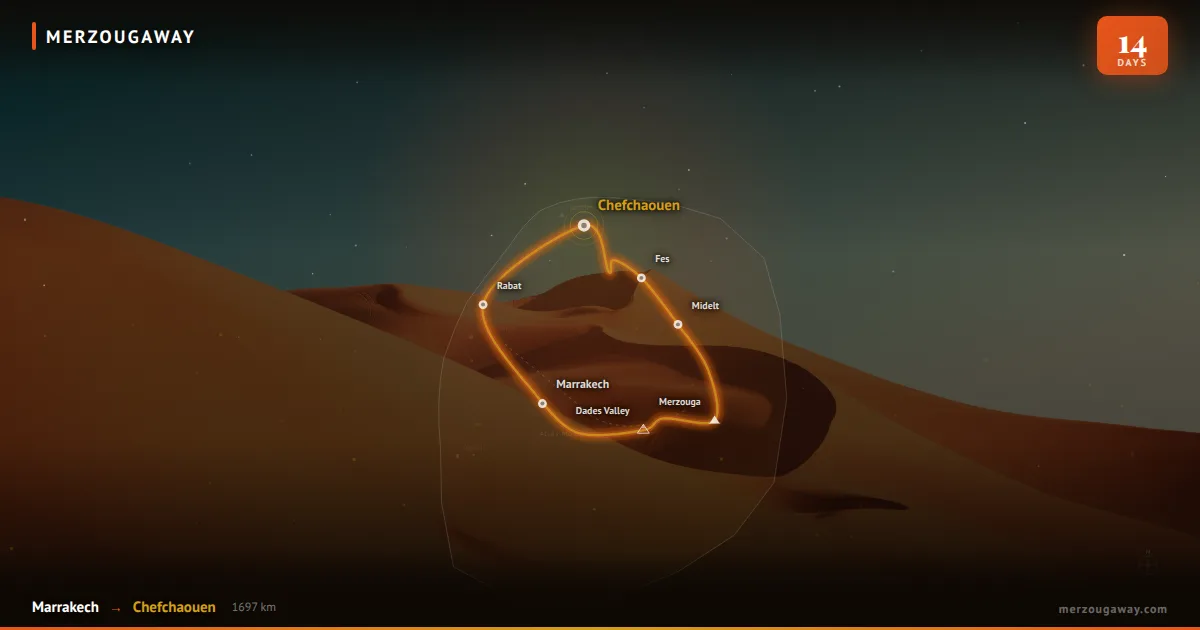
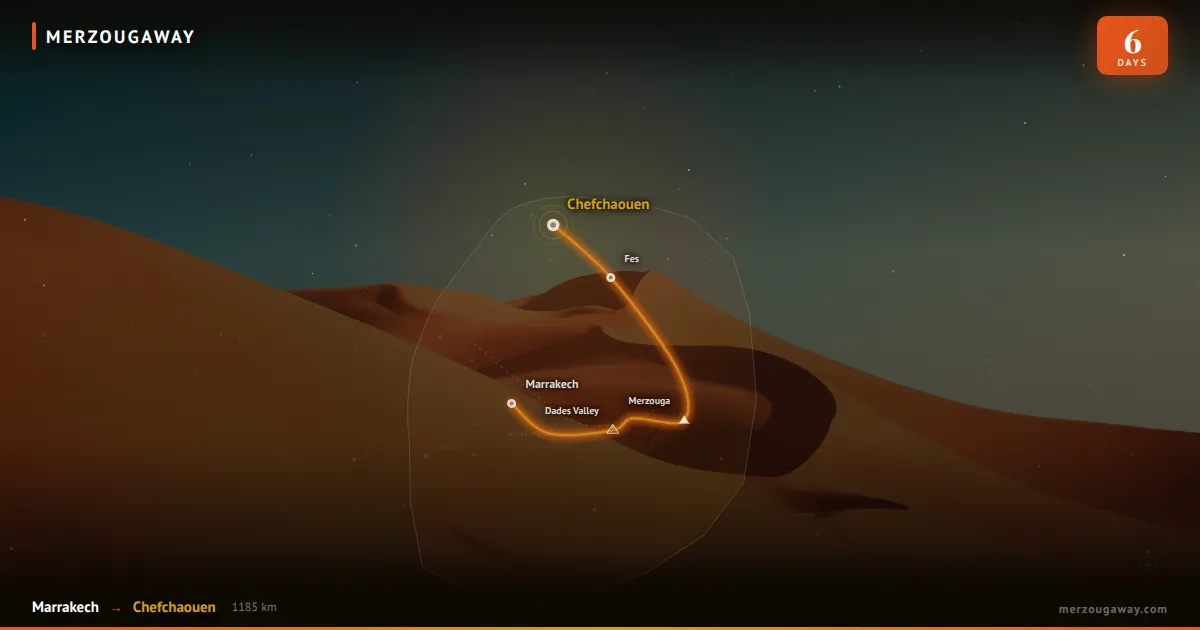
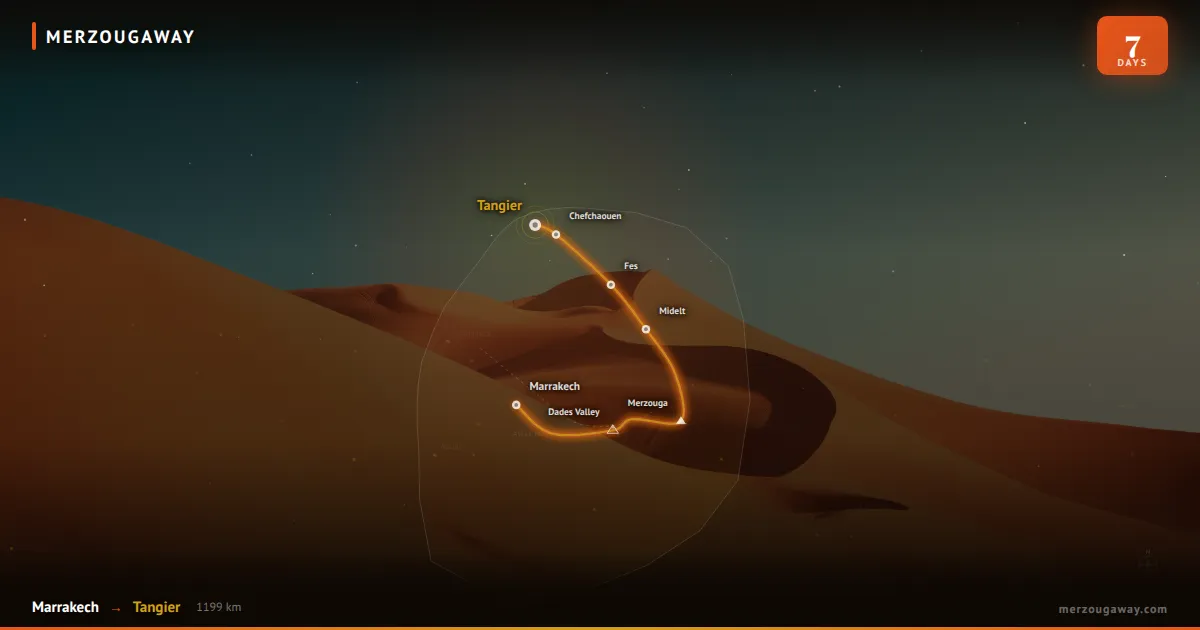
If Marrakech is the first stop before a Sahara trip, it's worth booking a riad that isn't too deep into the medina's alleys for your final night — an early pickup for a multi-day desert tour is much easier from somewhere your driver can actually reach by vehicle. See our 3-day Marrakech to Merzouga desert tour for how that leg of the trip typically runs.
Contact Us
Want help figuring out which part of the city fits your trip, or planning the desert leg that often follows a Marrakech stay? Get in touch.
- WhatsApp: +212 675 203 319 / +212 668 534 981
- Email: hello@merzougaway.com
Last updated: July 2026.
Sahara Route & Drive-Time Estimator
Calculate realistic driving hours across the High Atlas (Tizi n'Tichka pass), compare scenic stops (Dadès, Todra, Ziz), and plan your custom desert itinerary.

MerzougaWay Team
We are a passionate team of local guides dedicated to sharing the beauty and culture of our home, Morocco. Our journey began with a simple desire to offer authentic, memorable experiences that go beyond the typical tourist trails.