Morocco vs Egypt vs Jordan: Which Should You Visit?
Deciding between Morocco, Egypt, and Jordan for your next trip? An honest 2026 comparison covering safety, visas, cost, and what each country actually offers — including a real update on Jordan's current travel advisory.
These three countries end up on the same shortlist constantly, and for good reason — all three offer desert landscapes, ancient history, and a very different experience from a typical European city break. But they're not interchangeable, and the honest comparison in 2026 has more nuance than most guides let on, especially when it comes to safety. Here's what actually separates them.
[!NOTE] Fast-Facts & Direct Answer Summary
Deciding between Morocco, Egypt, and Jordan for your next trip? An honest 2026 comparison covering safety, visas, cost, and what each country actually offers — including a real update on Jordan's current travel advisory.
- Destination Focus: Authentic Moroccan culture, scenic routes, and local travel insights
- Currency & Payments: Moroccan Dirham (MAD; ~10 MAD ≈ €1 / $1.08 USD). Cash is essential outside major hotels
- Best Travel Window: October through April offers ideal temperate weather across Morocco and the desert
- Local Hospitality: Berber culture is renowned for warm hospitality, mint tea welcoming rituals, and rich musical heritage.
Safety: The Part You Shouldn't Skip
Morocco is currently the safest of the three, and it isn't close. The country welcomed over 18 million tourists in 2025 with no major security incidents, hasn't had a terrorist attack since 2011, and — importantly — sits far enough from the eastern Mediterranean that regional tensions involving Israel, Gaza, and Iran have essentially zero direct impact here, geographically or politically.
Egypt is also genuinely safe for the average visitor. Tourist areas — Cairo, Luxor, Aswan, the Nile cruise route, Hurghada, Sharm el-Sheikh — remain busy and well-secured, and Egypt matched Morocco with a record 18 million visitors in 2025. The Ministry of Tourism and Antiquities has invested heavily in security coordination around major archaeological sites in recent years.
Jordan is the one that needs a real caveat, not a glossed-over "it's fine." Amman, Petra, Wadi Rum, the Dead Sea, and Aqaba are historically some of the most peaceful, well-protected tourist areas in the Middle East, and that reputation is well-earned. But as of 2026, several Western governments — including the US State Department — have elevated their travel advisory for Jordan to "Reconsider Travel," the second-highest warning level, specifically citing regional conflict risk and increased military activity that has occasionally disrupted civilian air traffic. If Jordan is on your list, check your government's current advisory before booking rather than relying on older information — this is a genuinely fluid situation, not a settled one.
Visas: Morocco Wins on Simplicity
This one isn't close either. Morocco is visa-free for up to 90 days for most Western nationalities — US, UK, EU, Canada, Australia — meaning you land and walk through. Egypt requires a tourist visa for most nationalities, but it's genuinely easy: about $25 USD on arrival or through the e-visa portal, taking a few minutes either way. Jordan is the most involved of the three — most travelers use the Jordan Pass (roughly 70-80 JOD, about $100 USD), which waives the standalone 40 JOD entry visa fee and bundles in entry to Petra and dozens of other sites, but it's an extra planning step the other two don't require.
Cost: Jordan Is Meaningfully More Expensive
Jordan is unambiguously the priciest of the three. Petra's entrance fee alone runs about 55 JOD (roughly $78 USD) per day if you're not using the Jordan Pass, and that's before accommodation, food, or transport. Egypt sits in the middle — the visa fee is modest, and costs for food, local transport, and guided tours are generally lower than Jordan. Morocco tends to be the most budget-friendly overall, particularly outside peak season, while still offering the full range from backpacker-friendly to genuinely luxurious.
What Each Country Actually Offers
This is where it stops being about logistics and starts being about what you actually want to see.
Egypt is the choice for ancient history in its most literal form — the Pyramids of Giza, the temples of Luxor and Karnak, a Nile cruise, the Valley of the Kings. If your trip is built around "I want to stand in front of the pyramids," nothing else on this list substitutes for that.
Jordan centers on Petra — the rock-carved city is genuinely one of the most extraordinary sights in the world — plus Wadi Rum's red desert (where several Mars-set films were shot) and floating in the Dead Sea. It's a smaller, more tightly focused itinerary than the other two.
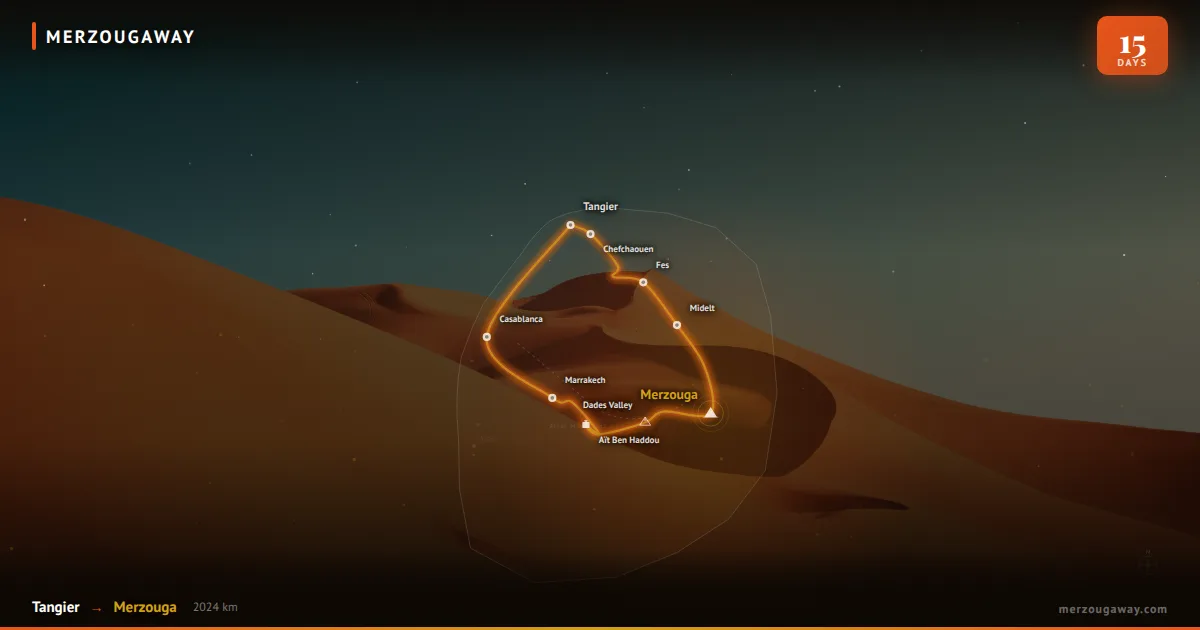
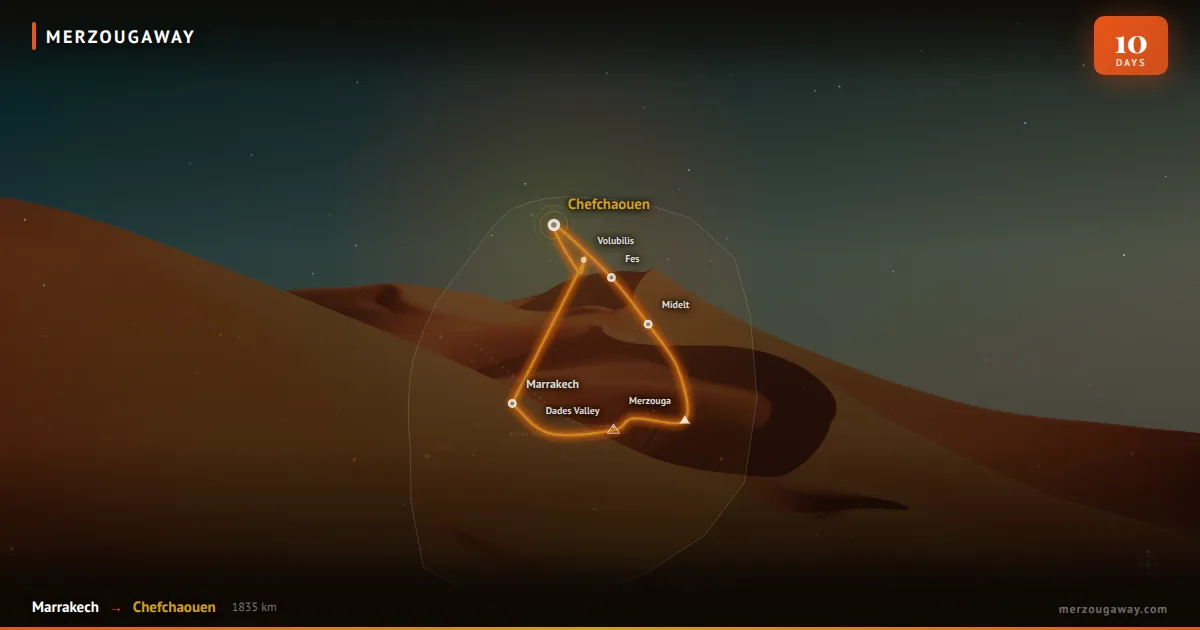
Morocco offers the broadest range in the smallest space: imperial cities (Marrakech, Fes, Meknes, Rabat), the Sahara Desert around Merzouga and Erg Chebbi, the High Atlas Mountains, and an Atlantic coastline, all reachable within a single overland trip rather than requiring separate flights between regions. It's the country where "desert, mountains, medina, and coast" can genuinely all happen on one itinerary.
Can You Visit More Than One?
Not easily in a single trip, and we'd be honest with you about that rather than pretend otherwise. These three countries aren't adjacent to each other, and combining them means separate flights and a much bigger overall trip. Most travelers pick one per visit and treat the others as future trips — which, if it helps the decision at all, is exactly why Morocco tends to work well as a first pick: it rewards a return visit with an entirely different regional itinerary (the north, the coast, the deep desert) rather than repeating what you've already seen.
Master Comparison Matrix: Morocco vs Egypt vs Jordan
For travelers dreaming of ancient ruins, desert sand seas, vibrant souks, and Islamic architecture, the Middle East and North Africa (MENA) region offers three legendary titans: Morocco, Egypt, and Jordan. While all three share Arabic linguistic heritage and breathtaking landscapes, their travel experiences diverge radically in terms of safety, street hassle, landscape character, and overall tourist infrastructure.
The following master evaluation matrix compares the three destinations head-to-head across critical travel factors:
| Evaluation Factor & Metric | Morocco (Kingdom of the West) | Egypt (Cradle of Civilization) | Jordan (The Hashemite Kingdom) | | :--- | :--- | :--- | :--- | | Primary Landscape Highlight | Erg Chebbi Sahara Dunes (150m tall), High Atlas alpine peaks, lush river canyons | The Nile River Valley, White Desert chalk formations, Red Sea reefs | Wadi Rum Martian sandstone rock valleys, Dead Sea mineral waters | | Archaeological Antiquities | Roman Volubilis, medieval 11th-century clay ksour, imperial Islamic medinas | The Great Pyramids of Giza, Luxor Valley of the Kings, Karnak, Abu Simbel | The Nabataean Rose-Red City of Petra, Roman Jerash ruins | | Street Hassle & Pressure Level | Low to Moderate: Polite bargaining; peaceful rural Berber hospitality | High: Intense, aggressive street touts, carriage drivers & hawkers | Very Low: Courteous, welcoming, low-pressure Bedouin hospitality | | Tourism Infrastructure & Transit | Superior: Modern high-speed bullet trains (Al Boraq), modern toll highways, luxury glamping | Moderate: Nile cruises, Sleeper trains, domestic flights, heavy traffic | Excellent: Modern desert highway, compact country, easy rental car driving | | Safety & Geopolitical Stability | Highest in Region: Westernmost geographic isolation; peaceful monarchy | Moderate: Heavy police escorts, occasional regional security alerts | High: Stable kingdom, professional tourist police, peaceful borders | | Average Daily Travel Budget | 600 – 1,500 MAD ($60 – $150 USD) | $45 – $110 USD (Very cheap due to Egyptian Pound devaluation) | $110 – $220 USD (Most expensive due to strong pegged Jordanian Dinar) |
Desert Landscape Showdown: Erg Chebbi vs Wadi Rum vs Egypt's Deserts
The desert landscapes across these three nations feature completely distinct geological personalities:
- Morocco's Erg Chebbi (The Golden Sand Mountain Sea): If your dream of the desert is soaring, razor-sharp 150-meter-tall golden sand dunes glowing under amber sunsets, Erg Chebbi in Merzouga is unmatched. It represents the authentic, classic romantic Sahara of Hollywood legend, complete with luxury glamping camps featuring en-suite hot showers, reverse-cycle heating, and camel caravans navigating massive slipfaces.
- Jordan's Wadi Rum (The Valley of the Moon): Wadi Rum is not a sand sea; it is an awe-inspiring Martian wilderness of colossal red sandstone monoliths, natural rock arches, and narrow slot canyons rising vertically out of red desert flats. Accommodations are predominantly Bedouin-run camps featuring geodesic Martian bubble domes.
- Egypt's White Desert & Western Oases: Egypt features the surreal White Desert (Sahara el Beyda), characterized by wind-eroded white calcium chalk mushroom formations and vast uninhabited black desert plains, accessed via rustic expedition 4x4 camping rather than luxury glamping.
The Tourist Experience: Street Hassle, Hospitality, and Independence
How you feel walking down the street fundamentally shapes your vacation memories:
- Morocco's Balanced Atmosphere: Moroccan souk merchants are passionate negotiators, but interactions are fundamentally good-humored. A polite "La, shukran" (No, thank you) is respected. In rural Amazigh regions like the High Atlas and Merzouga, hospitality is warm, gentle, and protective. Independent road-tripping and self-driving are exceptionally safe and easy.
- Egypt's High-Pressure Tourist Sites: Visiting the Giza Pyramids or Luxor temples involves navigating some of the most aggressive, relentless touts, camel drivers, and alabaster salesmen on earth. Independent exploration can be exhausting without an experienced private licensed guide to act as a buffer.
- Jordan's Gentle Bedouin Welcome: Jordan is celebrated for having the lowest street pressure in the Arab world. Bedouins in Petra and Wadi Rum will frequently invite you for cardamom coffee or sage tea purely out of genuine cultural hospitality ("Ahlan wa Sahlan"), without demanding tips or forcing purchases.
Final Verdict: Which Destination Should You Choose?
- Choose Morocco if: You desire the ultimate blend of dramatic mountain passes, authentic 150-meter golden Sahara sand dunes, vibrant medieval medinas, world-class culinary riads, and supreme ease of self-drive or private 4x4 touring.
- Choose Egypt if: You are an uncompromising archaeology buff whose primary travel dream is standing before the Great Pyramids, Tutankhamun's gold treasures, and monumental 3,000-year-old pharaonic temples along the Nile.
- Choose Jordan if: You have a compact 7-to-8 day holiday window, desire world-class ancient wonders (Petra), and want effortless, safe rental-car road tripping through dramatic canyon scenery and Bedouin culture.
Cultural Immersion: Bedouin vs Amazigh vs Nubian Hospitality
The human connections you forge define the soul of each destination:
- Morocco's Indigenous Amazigh Hospitality: In Morocco, Amazigh culture is woven deeply into every facet of mountain and desert life. When you stay in an earthen kasbah in Dades or an Erg Chebbi luxury camp, you are hosted by native Berber families whose hospitality is gentle, modest, and protective. Communal campfire drumming (Ahidous), steaming glasses of mint tea infused with wild thyme, and conversations about oasis irrigation create profound emotional bonds without commercial pressure.
- Jordan's Bedouin Traditions in Wadi Rum: Jordan's Bedouin tribes (such as the Zalabieh in Wadi Rum) are legendary for their noble, generous hospitality. Sharing cardamom-spiced black tea around an open fire in a sandstone canyon, listening to the single-stringed rababa fiddle, and dining on Zarb (meat and vegetables slow-cooked in subterranean sand ovens) is warm, dignified, and relaxing.
- Egypt's Nubian and Nile Valley Culture: In Upper Egypt (Aswan and Luxor), Nubian villages with brightly painted domed adobe houses offer vibrant music, spicy hibiscus tea (karkadeh), and deep Nile river traditions, providing a welcome cultural contrast to the busy streets of Cairo.
Transportation and Road Infrastructure: Self-Driving Realities
- Morocco: The King of Road Trips: Morocco possesses the finest road infrastructure in North Africa. Modern divided toll motorways (Autoroutes) link the major cities, while smooth, paved national highways (like the N9 and N10) cross the High Atlas and desert valleys. Self-driving is safe, navigation via Google Maps is accurate, and modern fuel stations with espresso bars are ubiquitous.
- Jordan: Compact and Effortless: Jordan is exceptionally compact—you can drive from Amman in the north to the Red Sea in the south in just four hours along the Desert Highway or scenic King's Highway. Rental car driving is straightforward, police checkpoints are courteous, and signage is bilingual (Arabic and English).
- Egypt: Chauffeurs and Convoys Only: Self-driving in Egypt is strongly discouraged for tourists due to chaotic urban traffic in Cairo, poorly maintained rural roads, and complex police checkpoint regulations that require tourist police escorts or domestic flights.
Food and Dining Showdown: Moroccan Tagines vs Egyptian Koshary vs Jordanian Mansaf
The culinary traditions of each nation offer distinct, delicious expressions of Middle Eastern and North African heritage:
- Morocco's Slow-Cooked Elegance: Moroccan gastronomy is renowned for its sophisticated balance of sweet and savory spices—saffron, cumin, cinnamon, ginger, and turmeric. Slow-cooked tagines in conical earthen clay vessels, flaky pastillas dusted with powdered sugar, and fluffy steamed semolina couscous deliver an intensely aromatic, comforting dining experience.
- Egypt's Hearty Street Flavors: Egyptian dining is anchored by robust, carb-heavy street food classics like Koshary (a satisfying mix of rice, lentils, macaroni, chickpeas, and crispy fried onions topped with spicy tomato-garlic vinegar sauce) and Ful Medames (slow-stewed fava beans with olive oil and cumin).
- Jordan's Regal Feasts: Jordanian cuisine centers around communal hospitality, crowned by the national dish Mansaf—tender lamb slow-cooked in a rich, tangy sauce of fermented dried yogurt (jameed), served over a giant platter of turmeric rice and flatbread, garnished with toasted pine nuts and almonds.
Frequently Asked Questions (FAQ)
Is Morocco safer than Egypt and Jordan right now?
Yes, currently by a clear margin. Morocco has no direct exposure to the regional tensions affecting Jordan's current elevated travel advisory, and hasn't had a terrorist incident since 2011. Egypt's tourist areas are also genuinely safe, but Jordan is the one to check current government advisories for before booking.
Which country is cheapest to visit?
Morocco is generally the most budget-friendly of the three, followed by Egypt. Jordan is meaningfully more expensive, largely driven by Petra's entrance costs and the overall higher price of tours and accommodation.
Do I need a visa for Morocco?
Most Western nationalities (US, UK, EU, Canada, Australia) can enter Morocco visa-free for up to 90 days — the simplest entry of the three countries.
Which is better for a first-time desert experience?
Morocco and Jordan both offer genuine desert experiences — Erg Chebbi's dunes near Merzouga versus Wadi Rum's red rock desert. Morocco's desert is more easily combined with cities, mountains, and coast in one trip; Jordan's is more singularly focused around Wadi Rum itself.
What's the best way to experience Morocco's full range in one trip?
A multi-day circuit that combines the imperial cities with the Sahara is the most efficient way to see why Morocco stands out. Our 12-Day Grand Morocco Circuit covers the imperial cities, the Sahara, and the Atlantic coast in one private trip, and the 8-Day Casablanca to Merzouga, Fes & Marrakech tour is a shorter version covering the same range.
Contact Information
For more information or to plan your trip, contact us at:
Email: hello@merzougaway.com WhatsApp/Phone: +212675203319 / +212668534981
Sahara Route & Drive-Time Estimator
Calculate realistic driving hours across the High Atlas (Tizi n'Tichka pass), compare scenic stops (Dadès, Todra, Ziz), and plan your custom desert itinerary.
MerzougaWay Team
We are a passionate team of local guides dedicated to sharing the beauty and culture of our home, Morocco. Our journey began with a simple desire to offer authentic, memorable experiences that go beyond the typical tourist trails.