Why September is the Best Month for Trekking and Desert Tours in Morocco
September splits the difference between summer's heat and winter's chill — cooler High Atlas trekking, warm but no longer brutal Sahara days, and clear skies for both.
For travelers weighing a High Atlas trek against a Marrakech-to-Merzouga desert tour, September lands in a genuine sweet spot between them. The intense summer heat has broken by then, but the cold of late autumn hasn't arrived, which matters for both halves of that trip: daytime highs in the High Atlas typically sit in the low-to-mid 20s°C, comfortable for long village-to-village walks and ascents without the exhaustion of a July or August trek, while nights are cool enough for good sleep in a mountain lodge or tent without the deeper cold that shows up later in autumn. Down in the Sahara around Merzouga and Erg Chebbi, the worst of the summer heat has also passed by September — days are still warm and dry, but evenings turn pleasantly cool, which is exactly the conditions you want for a sunset camel ride, a 4x4 excursion, or quad biking without the sun working against you.
The clarity of the skies is a real bonus on top of the temperature. September air tends to be crisp with less haze than midsummer, which means sharper mountain views across ridgelines and terraced valleys, and in the desert, clean horizons with the kind of golden-hour light that makes dune photography look effortless — sand ripples etched sharply at dawn and dusk, good for silhouettes and long shadows. If photography is part of the trip, a circular polarizer for the mountains and a lightweight tripod for desert night shots are worth packing.
Trail and track conditions tend to be good too: mountain paths are well-trodden by September without being overused, rural routes between Berber villages are livelier than usual with harvest-season activity, and in the desert, tracks are generally firm and reliable for 4x4 support vehicles. Crowds thin out from their August peak while the season's infrastructure — open guesthouses, full staffing at camps and lodges — stays intact, which is a genuinely useful combination: you get the accessibility of high season without its worst bottlenecks, and villages settle back into a more normal working rhythm rather than a tourist-season one.
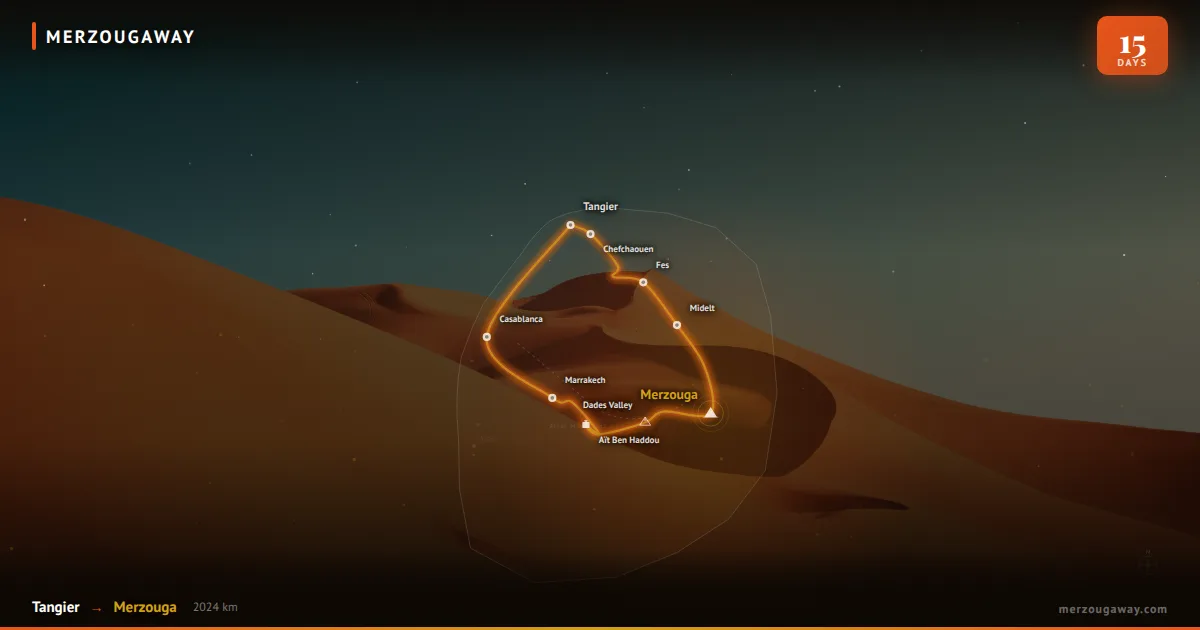
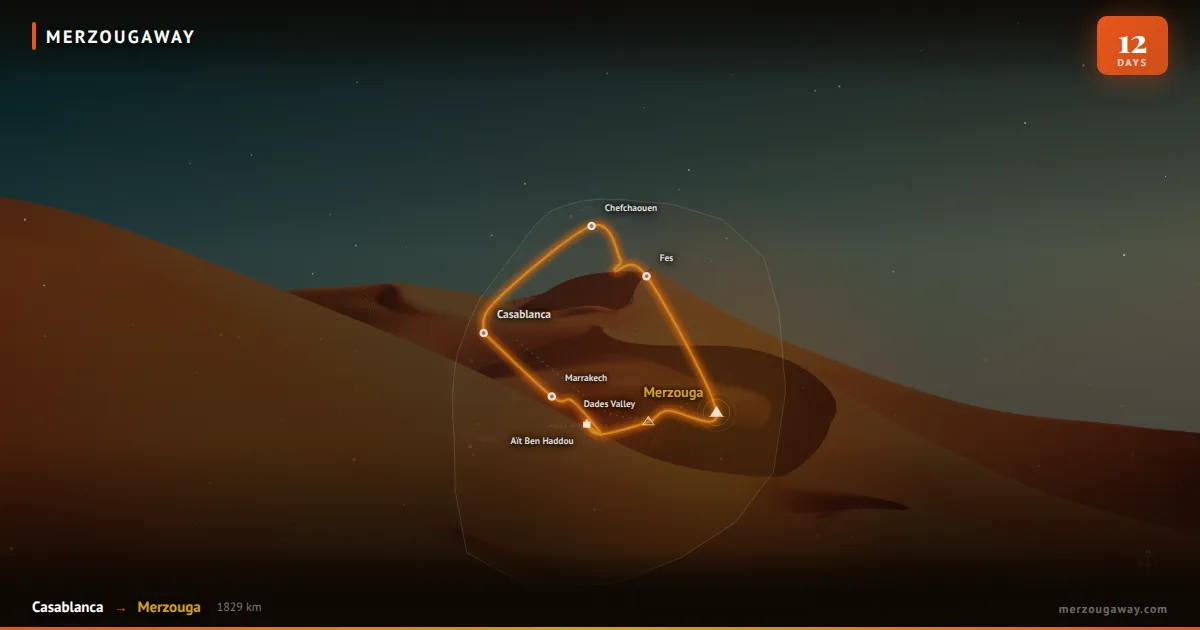
The stable weather also makes September a good month for stringing a multi-city, multi-region trip together — souks and palaces in Marrakech, a stretch of High Atlas trekking, then a desert camp under the stars near Merzouga, without weather forcing compromises at any stage. The same logic holds whether you're starting from Marrakech, Fes, Casablanca, Rabat, Tangier, Agadir, Essaouira, or Ouarzazate, and works for anything from a short 2-day desert trip to a longer combined itinerary.
A few smaller advantages round it out: cooler temperatures mean lower dehydration and fatigue risk on treks, and better sleep in camps and lodges thanks to comfortable night temperatures. Early-autumn markets are also full of seasonal produce, so meals at mountain guesthouses and desert camps tend to lean on fresh, hearty late-summer and early-harvest ingredients.
[!NOTE] Fast-Facts & Direct Answer Summary
September splits the difference between summer's heat and winter's chill — cooler High Atlas trekking, warm but no longer brutal Sahara days, and clear skies for both.
- Destination Focus: Authentic Moroccan culture, scenic routes, and local travel insights
- Currency & Payments: Moroccan Dirham (MAD; ~10 MAD ≈ €1 / $1.08 USD). Cash is essential outside major hotels
- Best Travel Window: October through April offers ideal temperate weather across Morocco and the desert
- Local Hospitality: Berber culture is renowned for warm hospitality, mint tea welcoming rituals, and rich musical heritage.
What to pack
Broken-in trekking shoes or lightweight boots cover the mountains; sandals or breathable shoes are enough for camp and oasis walking. Bring layers — quick-dry base layers plus a light fleece or sweater for evenings, and a breathable windbreaker for wind on exposed ridges or dunes. Sun protection matters as much as in summer: a wide-brim hat, sunglasses, high-SPF sunscreen, and a neck buff for desert dust. If you're bringing a camera for night shots, a lightweight tripod and a headlamp with a red-light mode are worth the extra weight. And keep a reusable water bottle on you throughout — September is moderate, not cold, and hydration still matters on long trekking or desert days.
A sample week: trekking plus desert
A rough shape for a 7-day September trip starting in Marrakech: arrive and spend the first evening wandering the medina with dinner near Jemaa el-Fnaa; transfer to the High Atlas for a half-day acclimatization trek and an overnight in a mountain lodge; a full day of trekking on panoramic trails with lunch at a Berber home; then a scenic drive to Merzouga via the Dades or Ziz Valley, timed for a sunset camel ride and an overnight in a desert camp; sunrise on the dunes the next morning, with quad biking or a 4x4 excursion optional through the day and a campfire with local music that evening; a return drive to Marrakech with kasbah and viewpoint stops along the way; and a free final morning for shopping or a spa visit before departure. The same shape adjusts easily to start from Fes, Casablanca, Rabat, Tangier, Agadir, Essaouira, or Ouarzazate instead — the underlying logic (comfortable weather, clear skies, smooth logistics) holds regardless of starting city.
Traveling responsibly in September
Choosing locally run guesthouses and guides puts more of what you spend directly into the villages you're passing through. Water is worth conserving at desert camps even outside the driest months, and packing out small waste helps keep both mountain trails and dune areas clean. Modest, lightweight clothing works well in rural communities both for comfort and as a gesture of respect, and staying on marked trails protects fragile soil and vegetation in both the mountains and the dunes.
Comprehensive September Climate and Travel Matrix across Morocco
When seasoned travel planners, alpine trekking guides, and indigenous Berber tour leaders are asked to name the single finest month to explore Morocco, the overwhelming consensus points to September.
Positioned in the golden shoulder season between the scorching summer heatwaves of July and August and the packed tour bus crowds of late October and November, September delivers the ideal atmospheric equilibrium. Across Morocco's diverse microclimates—from the high peaks of the Atlas Mountains to the golden sand dunes of Erg Chebbi and the breezy Atlantic ramparts of Essaouira—September offers temperate weather, vibrant harvest festivals, and calm, uncrowded hospitality.
The following master meteorological matrix details expected conditions across Morocco's key travel regions during September:
| Geographic Region & Hub | Daytime Average High Temp | Nighttime Average Low Temp | Sunshine & Daylight Hours | Rainfall Probability | Ideal Activities & Experiences | | :--- | :--- | :--- | :--- | :--- | :--- | | Marrakech (Haouz Plain) | 31°C to 33°C (88°F to 91°F) | 18°C to 20°C (64°F to 68°F) | 10 Hours of Crisp Sun | Very Low (< 2 days/month) | Medina walking tours, rooftop dining, riad garden relaxation | | High Atlas Mountains (Imlil / Toubkal) | 22°C to 25°C (72°F to 77°F) | 11°C to 13°C (52°F to 55°F) | 10 Hours of High Alpine Sun | Very Low (Clear mountain skies) | Peak Trekking: Mount Toubkal summit (4,167m), Berber village walks | | Merzouga & Erg Chebbi (Sahara Dunes) | 33°C to 35°C (91°F to 95°F) | 20°C to 22°C (68°F to 72°F) | 11 Hours of Radiant Sun | Negligible (Zero rain) | Peak Desert Season: Sunset camel treks, luxury glamping, campfire drumming | | Fes & Imperial North (Saïss Plain) | 29°C to 31°C (84°F to 88°F) | 16°C to 18°C (61°F to 64°F) | 10 Hours of Mild Sun | Low (1 to 2 days/month) | UNESCO medina exploration, Chouara Tannery, Roman Volubilis | | Essaouira & Taghazout (Atlantic Coast) | 22°C to 24°C (72°F to 75°F) | 16°C to 18°C (61°F to 64°F) | 9 Hours (Tempered by Trade Winds) | Very Low | Surfing, fresh seafood dining along ramparts, coastal walks |
The Breaking of the Summer Heat and the Desert Revival
The transition from late August into September marks a profound atmospheric shift in the Sahara Desert:
- The End of the Extreme Chergui Heat: During midsummer (July and August), the blistering continental desert wind known as the Chergui pushes daytime temperatures in Merzouga past 42°C to 45°C (108°F to 113°F), forcing most desert activities into early dawn or late twilight. By mid-September, the summer thermal dome collapses, daytime temperatures drop into the low-to-mid 30s°C (low 90s°F), and night temperatures settle into an idyllic 20°C to 22°C (68°F to 72°F).
- Sublime Night Conditions for Desert Glamping: September nights in Erg Chebbi are arguably the most comfortable of the entire year. Unlike the freezing winter nights of December and January (where temperatures plunge near 0°C / 32°F), September evenings are warm enough to dine outdoors under the stars in a light cotton shirt, lounge around the acacia campfire without heavy down coats, and sleep with open canvas tent flaps to catch the gentle desert breeze.
- Early Morning Dune Traction: The slightly cooler night air restores moisture cohesion to the upper sand layer, making morning sandboarding, dune buggy runs, and barefoot sunrise hikes significantly firmer, cooler, and less physically exhausting.
The Tafilalet Date Harvest: Cultural Riches of the Oasis
September coincides with one of the most culturally significant and joyful agricultural events in North African desert life: the Great Date Harvest (Moussem des Dattes) across the Tafilalet oasis basin:
- Vibrant Date Palm Groves: As you drive along the N13 highway through the Ziz River Valley and Erfoud toward Merzouga, hundreds of thousands of towering date palms (Phoenix dactylifera) droop with massive, heavy clusters of ripening golden amber and deep purple fruit.
- Tasting Royal Medjool Dates at the Source: The Tafilalet region is the historical birthplace of the world-renowned Medjool date, historically reserved exclusively for Moroccan sultans and imperial royalty. In September, roadside markets in Erfoud and Rissani overflow with fresh-picked, plump Medjool, Deglet Noor, and Boufeggous dates. Visiting farmers' cooperatives allows travelers to taste fresh dates harvested just hours earlier, enjoying an extraordinary caramel sweetness impossible to find in exported supermarket boxes.
- Nomadic and Oasis Community Festivities: Following the date harvest, oasis villages hold traditional musical gatherings, seasonal weddings, and regional harvest fairs. The mood across the desert communities is jubilant, generous, and deeply welcoming.
Peak High Atlas Trekking Conditions: Summiting Mount Toubkal
For adventure enthusiasts combining a Sahara expedition with mountain trekking, September is the undisputed premier month for hiking the High Atlas:
- Zero Winter Snow, Zero Summer Torment: In spring, high passes like Mount Toubkal (4,167m / 13,671 ft) still harbor dangerous snowfields requiring crampons and ice axes. In July and August, lower valley trails are brutally hot. In September, the entire alpine trail network is bone-dry, stable, and warm. Daytime summit conditions feature crystal-clear blue skies with zero morning cloud cover, providing 100-mile visibility reaching from the Atlas crest all the way south to the pre-Saharan desert plateaus.
- Lush Valley Harvests: High Berber villages like Imlil, Armed, and Aroumd are surrounded by terraced walnut and apple orchards undergoing their annual harvest, with village lanes perfumed by drying herbs and fresh mountain produce.
The Shoulder Season Value Advantage
Beyond spectacular weather, traveling in September provides compelling economic and experiential advantages:
- Beating the Autumn Tour Bus Influx: Late October and November represent the absolute peak tour bus season in Morocco, resulting in crowded medina pathways, long queues at monuments like the Jardin Majorelle, and booked-out desert camps. September offers a serene window of calm: boutique riads have prime room availability, desert camps host smaller, intimate guest numbers, and local guides provide unhurried, personalized attention.
- Superior Flight and Transport Pricing: International flight fares to Marrakech (RAK) and Casablanca (CMN) drop sharply after the European August school holiday rush, allowing smart travelers to secure premium airline seats and boutique riad suites at favorable shoulder-season rates.
Practical Travel Tips for Maximizing a September Moroccan Journey
To fully capitalize on September's golden weather window, incorporate these practical travel strategies:
- Reserve Desert Glamping Camps Early: Because September kicks off the premier autumn desert season, the finest luxury camps in Erg Chebbi (featuring private en-suite bathrooms, air conditioning, and elevated dune viewing terraces) book out months in advance. Secure your MerzougaWay glamping suite early to guarantee prime placement.
- Hydration and Sun Safety: While September temperatures are dramatically cooler than midsummer, midday sun index ratings remain high (UV Index 7-8). Drink at least 3 to 4 liters of bottled mineral water daily, reapply broad-spectrum sunscreen, and wear polarized sunglasses to eliminate dune glare.
- Packing for Multiple Climates: If your September itinerary spans the High Atlas mountains and the Sahara Desert, prepare for wide thermal ranges: lightweight breathable apparel for daytime dune hikes, layered fleeces for crisp alpine evenings in Imlil, and elegant evening wear for Marrakech riads.
Photography in September: The Golden Light and Low-Angle Shadows
For landscape photographers, visual storytellers, and Instagram enthusiasts, September provides unmatched atmospheric clarity across Morocco:
- Absence of Dust and Summer Heat Distortion: During the scorching summer months of July and August, intense convection currents create severe atmospheric heat haze and suspended dust particles that blur telephoto horizons and wash out color saturation. By September, cooler, stable air currents settle over the desert, yielding crisp optical clarity that allows razor-sharp focus on distant mountain ridges and fine sand ripples.
- Golden Hour Extended Luminescence: The lower declination of the late-summer sun creates extended golden hour windows in the morning (06:30 to 08:30) and evening (17:30 to 19:15). In the dunes of Erg Chebbi, this warm, horizontal illumination exaggerates the tactile textures of wind-sculpted sand crests, casting deep violet and indigo shadows into dune amphitheaters while illuminating ridge edges with brilliant copper and crimson fire.
- Vibrant Oasis Color Contrasts: In the river valleys (Dades, Todra, and Ziz), September delivers a spectacular visual palette: golden ripening date clusters hanging against lush emerald palm fronds, framed by deep ochre and vermilion canyon cliffs beneath an intensely saturated Moroccan blue sky.
Frequently Asked Questions (FAQ)
Is September too hot for a Sahara Desert tour in Merzouga?
Early September still carries summer warmth, but by mid-to-late September, daytime temperatures drop to a comfortable 30°C–34°C, and nights become pleasantly cool (18°C–22°C), making it a great time for desert glamping.
Can you summit Mount Toubkal in September?
Yes. September is one of the premier months for trekking Mount Toubkal (4,167m) in the High Atlas. Weather conditions are generally dry, stable, and snow-free, with clear mountain views.
Are desert camps and mountain lodges fully operational in September?
Yes. September marks the official reopening of Morocco's peak autumn travel season. Luxury desert camps, mountain gîtes, and heritage riads are fully staffed and running regular excursions.
Plan your trip with us
We're MerzougaWay, a private tour operator — browse our tours to see multi-city and desert departures, or get in touch directly to build a custom trekking-plus-desert itinerary around September's weather window.
Email: hello@merzougaway.com WhatsApp/Phone: +212675203319 / +212668534981
Sahara Route & Drive-Time Estimator
Calculate realistic driving hours across the High Atlas (Tizi n'Tichka pass), compare scenic stops (Dadès, Todra, Ziz), and plan your custom desert itinerary.
MerzougaWay Team
We are a passionate team of local guides dedicated to sharing the beauty and culture of our home, Morocco. Our journey began with a simple desire to offer authentic, memorable experiences that go beyond the typical tourist trails.